The OEM-Only Clause: How to Force Your Insurer to Pay for Factory Parts on Your Luxury Build?
From the certified technicians at Procar Auto Bodyshop who fight this battle for customers every single day
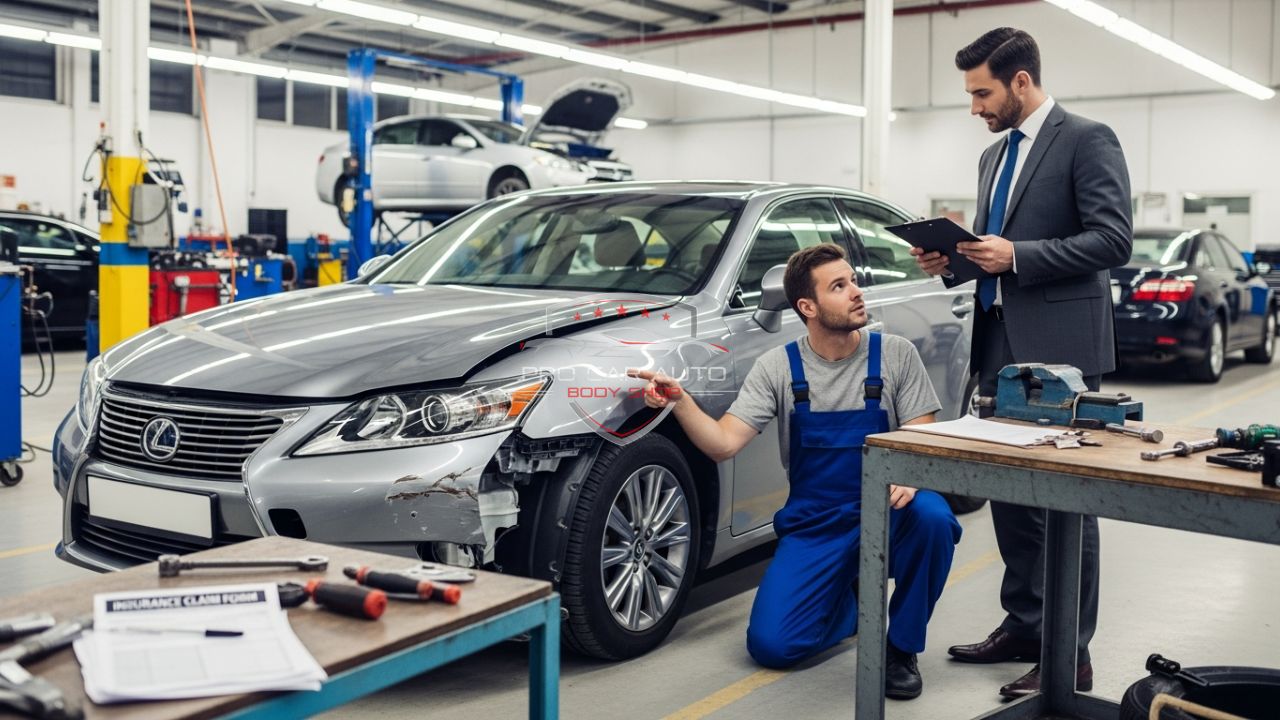
Let me tell you about a conversation I had last week with a BMW M5 owner. Her car was hit in a parking lot—front bumper, headlight, fender. About $8,000 in damage. Her insurance adjuster wrote an estimate using all aftermarket parts. Total savings to the insurance company? $2,400.
She asked me, “Can they do that? I paid $110,000 for this car. Don’t I deserve factory parts?“
The answer shocked her: Your insurance company can absolutely try to use aftermarket parts unless you know how to stop them.
I’ve been working on high-end European vehicles at Procar Auto Bodyshop for over 15 years. I’ve seen insurance companies try to put $89 aftermarket headlights on $90,000 Mercedes. I’ve watched them fight tooth and nail against OEM parts that are critical for safety systems, fit, and finish. And I’ve learned exactly how to force them to pay for what your luxury vehicle actually needs.
Today, I’m going to teach you everything I know about the OEM-only clause, your legal rights in Florida, and the exact strategies that work to get your insurance company to pay for factory parts.
What Are OEM Parts and Why Do They Matter?
Let’s start with the basics, because understanding the difference is critical.
OEM vs. Aftermarket vs. Used: Definitions
OEM (Original Equipment Manufacturer) Parts:
- Made by or for the vehicle manufacturer
- Same parts that came on your car from the factory
- Meet manufacturer specifications exactly
- Come with manufacturer warranty
- Stamped with manufacturer logo
- Designed specifically for your vehicle
Aftermarket Parts:
- Made by third-party companies (not the manufacturer)
- Designed to “fit” your vehicle but not to exact specifications
- May be cheaper materials or different manufacturing process
- Usually no manufacturer warranty (only aftermarket company warranty)
- Quality varies wildly from “almost as good” to “absolute junk“
- Not tested by your vehicle manufacturer
Used/Salvage OEM Parts:
- Genuine factory parts from wrecked vehicles
- May have unknown history, damage, or wear
- No warranty in most cases
- Age and condition vary
- Could be from different model years or trim levels
LKQ (Like Kind and Quality) Parts:
- Industry term insurance companies use for aftermarket or used parts
- “Like kind and quality” is subjective and often misleading
- Not the same as OEM despite what they imply
Why OEM Parts Matter More on Luxury Vehicles?
For a 2015 Honda Civic? Honestly, quality aftermarket parts are probably fine. The tolerances aren’t that tight, the technology isn’t that advanced, and the fit/finish expectations are reasonable.
For a 2023 BMW X5, Mercedes E-Class, or Audi Q7? Aftermarket parts can be a disaster.
Here’s why:
- Precision Engineering Luxury vehicles have tighter tolerances. Panels must align within millimeters. Aftermarket parts often don’t match these specifications, leading to:
- Panel gaps that look wrong
- Wind noise at highway speeds
- Water leaks during rain
- Premature wear on adjacent components
- Advanced Safety Systems Modern luxury vehicles have sensors, cameras, and radar systems integrated into body panels:
- Adaptive cruise control radar in front bumpers
- Lane-keeping cameras in side mirrors and windshields
- Parking sensors in bumpers
- Collision avoidance systems in grilles Aftermarket parts may not have proper mounting points, shielding, or calibration specifications for these systems. Result? Your $5,000 safety package doesn’t work properly.
- Material SpecificationsBMW uses specific aluminum alloys. Mercedes uses particular steel grades. Aftermarket manufacturers use whatever’s cheaper. This affects:
- Crash energy absorption
- Corrosion resistance
- Long-term durability
- Paint adhesion and matching
- Fit and Finish You paid $80,000+ for a vehicle that looks and feels premium. Aftermarket parts often have:
- Visible texture differences
- Misaligned mounting points
- Gaps and inconsistencies
- Paint that doesn’t match perfectly
- Cheaper materials that feel different
- Resale ValueCarFax and AutoCheck now flag aftermarket parts. When you sell or trade your luxury vehicle:
- Dealers discount values 10-20% for aftermarket repairs
- Private buyers walk away
- Certified pre-owned programs reject the vehicle
- Leasing companies charge thousands at turn-in
Pro Tip from the Shop: We’ve had customers trade in luxury vehicles and lose $5,000–$15,000 in value because of documented aftermarket parts. The insurance company “saved” them $2,000 on the repair, but it cost them $10,000 at trade-in. Do the math.
What Florida Law Actually Says About OEM Parts?
Now let’s talk about your legal rights. This is where most people—and many insurance agents—get it wrong.
Florida Statute § 627.7288: The Key Law
Florida law addresses parts in insurance repairs, and here’s what you need to know:
The Law Requires:
- Insurance companies CAN use non-OEM parts for repairs
- BUT they must be “like kind and quality” to the original parts
- AND they must disclose in writing when non-OEM parts are used
- AND the parts must carry at least the same warranty as OEM parts (or the duration of your ownership)
What This Means: Insurance companies aren’t required to use OEM parts by default. But they must use parts that are truly equivalent in kind and quality—and that’s where the fight begins.
The “Like Kind and Quality” Loophole
Insurance companies love this phrase because it’s subjective. They claim aftermarket parts are “like kind and quality” when they’re often anything but.
Their Argument: “It’s the same part type (a bumper is a bumper), so it’s like kind and quality.“
The Reality: A $150 aftermarket bumper for a BMW is NOT “like kind and quality” to a $950 OEM bumper with integrated sensors, premium materials, and exact fit specifications.
Your Leverage: When aftermarket parts don’t fit properly, don’t support safety systems, or don’t match material specifications, they’re NOT “like kind and quality“—and you can demand OEM.
When You Can Demand OEM Parts (Absolutely)?
There are specific situations where you have the absolute right to demand OEM parts, and insurance companies must comply.
1. Vehicle Under Manufacturer Warranty
If your vehicle is still under the manufacturer’s new vehicle warranty, aftermarket parts can void that warranty.
The Law: Insurance companies cannot require repairs that void your manufacturer warranty.
How to Use This:
- Check your warranty status (most luxury vehicles have 4-year/50,000-mile warranties)
- Get written confirmation from the dealer that aftermarket parts void warranty
- Present this to your insurance company
- They must use OEM parts or you can sue for bad faith
Pro Tip from the Shop: We keep relationships with local luxury dealers specifically to get these warranty letters for customers. The insurance company folds immediately when faced with warranty void documentation.
2. Leased Vehicles
If you lease your vehicle, the leasing company owns it—not you. Most lease agreements require:
- Repairs using OEM parts only
- Factory-approved repair procedures
- Restoration to original condition
How to Use This:
- Review your lease agreement (Section on repairs/damages)
- Contact the leasing company for written confirmation
- Present this to insurance—they cannot force you to violate your lease terms
Real Example: We had a Mercedes GLE lease customer. Her insurance wrote for aftermarket parts. We got a letter from Mercedes-Benz Financial Services stating lease agreement requires OEM parts. Insurance paid OEM within 24 hours.
3. Certified Pre-Owned Eligibility
Planning to trade or sell your vehicle as CPO (Certified Pre-Owned)? CPO programs have strict requirements:
- No aftermarket parts
- Factory repair procedures only
- Complete repair documentation
How to Use This:
- Get CPO requirements in writing from the manufacturer
- Show your insurance how aftermarket parts eliminate CPO eligibility
- Demonstrate the financial loss (CPO vehicles sell for $3,000–$8,000 more)
4. Safety System Integration
Modern luxury vehicles integrate safety systems into body panels:
- Radar sensors in bumpers and grilles
- Cameras in mirrors, bumpers, windshields
- LIDAR/sensors for autonomous features
- Collision avoidance hardware
How to Use This:
- Identify which damaged parts contain safety systems
- Get manufacturer documentation on integration requirements
- Argue aftermarket parts don’t meet safety system specifications
- Reference manufacturer calibration procedures that require OEM parts
Pro Tip from the Shop: This is our most effective argument. We document every sensor, every camera, every integration point. Insurance adjusters know they’ll lose the safety system argument every time.
Need documentation proving your vehicle requires OEM parts? Procar Auto Bodyshop provides detailed safety system integration reports for insurance disputes—free for our customers.
The Insurance Company’s Dirty Tricks (And How to Counter Them)
Let me share the tactics insurance companies use to avoid paying for OEM parts—and how to fight back.
Trick #1: “Aftermarket Parts Are the Same Quality”
Their Line: “These aftermarket parts meet or exceed OEM specifications.“
The Reality: They have no way to know this. Aftermarket manufacturers don’t submit parts to vehicle manufacturers for testing. There’s no independent certification.
Your Counter:
- Ask for written documentation proving equivalency
- Request test data comparing aftermarket to OEM specifications
- Demand certification that parts meet manufacturer crash safety standards
- They can’t provide this because it doesn’t exist
Trick #2: “Your Policy Allows Aftermarket Parts”
Their Line: “Your policy permits the use of like kind and quality parts, which includes aftermarket.“
The Reality: Yes, but those parts must ACTUALLY be like kind and quality—not just cheaper alternatives.
Your Counter:
- “Show me in writing how this $180 aftermarket bumper is ‘like kind and quality’ to the $920 OEM bumper with integrated sensors.“
- Demand specific comparisons: materials, fit tolerance, warranty, safety integration
- Cite Florida Statute § 627.7288 requirement for TRUE equivalency
Trick #3: The Depreciation Game
Their Line: “Your vehicle is [X] years old. We’re depreciating the parts value, so faftermarket is appropriate.“
The Reality: Florida law doesn’t allow depreciation of parts in repair estimates. You’re entitled to restoration to pre-accident condition.
Your Counter:
- Florida law prohibits depreciation of parts in first-party (your own) insurance claims
- Even in third-party claims, depreciation doesn’t justify aftermarket parts
- Demand they cite the legal authority for depreciation
- File a complaint with Florida Department of Financial Services if they persist
Trick #4: “We Have a Lifetime Warranty on Aftermarket Parts”
Their Line: “The aftermarket parts come with a lifetime warranty, which is better than OEM.“
The Reality: That warranty is worthless if the part doesn’t fit right, damages other components, or causes safety system failures.
Your Counter:
- “Will your warranty cover the $15,000 loss in resale value?“
- “Will your warranty reimburse me when this doesn’t fit properly?“
- “Will your warranty cover damages to adjacent panels from improper fit?“
- “Will your warranty pay for safety system recalibration failures?“
Trick #5: Steering to Their Preferred Shops
Their Line: “If you use our DRP (Direct Repair Program) shop, they can make aftermarket parts work just fine.“
The Reality: DRP shops work for the insurance company, not you. They’re incentivized to keep costs low and insurance companies happy.
Your Counter:
- Florida law gives you the right to choose your own repair facility
- “I’m using a shop that specializes in [your vehicle brand] and requires OEM parts per manufacturer specifications.“
- “Your DRP shop is not certified by [BMW/Mercedes/Audi/etc.].“
Pro Tip from the Shop: We’re an independent shop. We work for YOU, not the insurance company. When we specify OEM parts, it’s because your vehicle actually needs them—not because we’re trying to inflate costs.
The Step-by-Step Strategy to Force OEM Parts
Here’s the exact process we use at Procar Auto Bodyshop to get insurance companies to pay for factory parts.
Step 1: Document Everything BEFORE Repair
Before any work begins:
- Get a detailed estimate specifying all OEM parts needed
- Document why each part must be OEM (safety systems, warranty, fit requirements)
- Take photos of all damaged areas and integrated systems
- Get manufacturer documentation for any parts with sensor integration
Step 2: Submit OEM Estimate to Insurance
Send your insurance company an estimate with:
- All OEM parts specified by part number
- Manufacturer documentation attached
- Safety system integration noted
- Warranty information included
- Certification requirements listed
Pro Tip from the Shop: We write supplements (additional estimates) specifically calling out why OEM is required for each part. Generic estimates get denied. Detailed documentation gets approved.
Step 3: Respond to Pushback in Writing
When insurance pushes back with aftermarket alternatives:
Your Written Response Should Include:
- “I do not authorize the use of non-OEM parts on my vehicle.“
- Specific reasons why aftermarket parts are NOT like kind and quality
- Reference to manufacturer requirements, warranty concerns, or lease agreement
- Citation to Florida Statute § 627.7288
- Request for written explanation of how aftermarket parts meet legal standard
- Deadline for response (10 business days is reasonable)
Step 4: Escalate to Supervisor/Manager
If the adjuster won’t budge:
- Request to speak with their supervisor
- Escalate to the claims manager
- Request a formal review of the decision
- Get everything in writing
Step 5: File a Complaint with Florida DFS
Florida Department of Financial Services regulates insurance companies. File a complaint if:
- Insurance refuses OEM parts despite legitimate requirements
- They’re not following Florida law
- They’re using deceptive practices
- They’re acting in bad faith
How to File:
- Online at www.myfloridacfo.com
- Phone: 1-877-693-5236
- Complaint form: Available on DFS website
Pro Tip from the Shop: Insurance companies HATE DFS complaints. We’ve seen cases where filing a complaint got immediate approval for OEM parts. The insurance company doesn’t want regulatory scrutiny.
Step 6: Consider Legal Action
For high-value disputes, consider consulting an attorney who specializes in insurance bad faith claims. If your insurance company:
- Refuses OEM parts despite clear requirements
- Won’t follow Florida law
- Is acting in bad faith
- Causing you financial harm
You may have grounds for a lawsuit. Many attorneys work on contingency (you don’t pay unless you win).
Stuck in an OEM parts dispute with your insurance company? Procar Auto Bodyshop can provide expert testimony and documentation to support your case. We’ve testified in dozens of these disputes—call 561-372-4547 for a consultation.
The Manufacturer Certification Advantage
Here’s a secret weapon most people don’t know about: manufacturer-certified repair facilities.
What Manufacturer Certification Means
BMW, Mercedes-Benz, Audi, Porsche, and other luxury brands certify specific body shops to repair their vehicles. Certification requires:
- Factory-trained technicians
- Manufacturer-approved equipment
- Adherence to factory repair procedures
- Use of OEM parts exclusively
How This Helps You
When you use a manufacturer-certified shop:
- Manufacturer Repair Procedures Require OEM: Certified shops must follow factory procedures, which specify OEM parts. Insurance companies can’t override manufacturer requirements.
- Shop Warranty Requires OEM: Certified shops provide manufacturer-backed warranties—but ONLY when using OEM parts. If they use aftermarket, the warranty is void.
- Insurance Companies Know They’ll Lose: When a certified facility writes an estimate with OEM parts citing manufacturer requirements, insurance companies typically approve it without argument. They know fighting a manufacturer-certified shop is a losing battle.
- Quality Assurance: The manufacturer audits certified shops. If work isn’t up to standard, the shop loses certification. This ensures your vehicle is repaired correctly.
Procar Auto Bodyshop’s Certifications
At Procar, we maintain certifications from multiple luxury manufacturers. This means:
- We’re required to use OEM parts per manufacturer standards
- We have direct access to manufacturer technical documentation
- We can cite specific manufacturer requirements in insurance disputes
- Our estimates carry weight that generic shops don’t have
Pro Tip from the Shop: When choosing a body shop for your luxury vehicle, ask about manufacturer certifications. If they’re not certified, they might be willing to use aftermarket parts to save money—which hurts you in the long run.
Real Case Studies: OEM Battles We’ve Won
Let me share some actual cases where we forced insurance companies to pay for OEM parts.
Case 1: The BMW X7 Sensor Integration Fight
The Vehicle: 2022 BMW X7 M50i ($110,000)
The Damage: Front bumper, grille, and hood from collision
Insurance’s Initial Estimate:
- Aftermarket bumper: $385
- Aftermarket grille: $220
- Aftermarket hood: $650
- Total savings: $2,100 compared to OEM
The Problem:
- Front bumper contains adaptive cruise control radar
- Grille houses front camera for collision avoidance
- Hood has alignment requirements for sensor calibration
- Aftermarket parts had no sensor mounting specifications
Our Strategy:
- Documented all integrated safety systems
- Obtained BMW technical documentation requiring OEM parts for sensor integration
- Got written statement from BMW dealer that aftermarket parts void safety system warranty
- Cited BMW repair procedures requiring OEM parts for proper sensor calibration
The Result: Insurance approved all OEM parts within 48 hours. Total cost increase: $2,100. Customer’s vehicle was repaired to manufacturer specifications with full safety system functionality.
The Lesson: Safety system integration is your strongest argument for OEM parts.
Case 2: The Mercedes Lease Agreement Victory
The Vehicle: 2023 Mercedes-Benz GLE 450 (Leased)
The Damage: Rear quarter panel and tailgate from parking lot incident
Insurance’s Initial Estimate:
- Aftermarket quarter panel: $420
- Aftermarket tailgate: $680
- Total savings: $1,850 compared to OEM
The Problem: Customer’s lease agreement with Mercedes-Benz Financial Services required:
- Repairs using OEM parts exclusively
- Restoration to original condition
- Factory-approved repair procedures
Our Strategy:
- Reviewed customer’s lease agreement
- Contacted Mercedes-Benz Financial Services for written confirmation
- Obtained letter stating aftermarket parts violate lease terms
- Presented to insurance showing customer would be charged for lease violations at turn-in
The Result: Insurance approved OEM parts immediately. They cannot force a customer to violate a lease agreement—that’s bad faith.
The Lesson: If you lease, your lease agreement is a powerful tool to demand OEM parts.
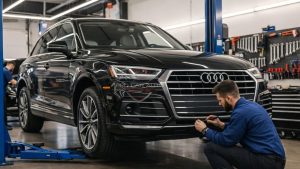
Case 3: The Audi Resale Value Argument
The Vehicle: 2020 Audi Q7 Prestige ($72,000 when new)
The Damage: Front fender, door, and rocker panel from sideswipe accident
Insurance’s Initial Estimate:
- All aftermarket body panels
- Total savings: $2,400 compared to OEM
The Problem: Customer planned to trade the vehicle within 12 months. We knew aftermarket parts would kill resale value.
Our Strategy:
- Obtained written estimates from three Audi dealers showing trade-in value reduction for aftermarket repairs ($6,000–$9,000 less)
- Demonstrated that saving $2,400 now would cost customer $7,500 at trade-in
- Argued this wasn’t making customer “whole” as required by insurance law
- Threatened diminished value claim for the difference
The Result: Insurance agreed to pay OEM parts to avoid potential diminished value liability. Customer’s vehicle maintained full resale value.
The Lesson: Document the long-term financial impact of aftermarket parts. Insurance companies will pay more now to avoid bigger claims later.
What to Put in Your Insurance Policy NOW?
Don’t wait until after an accident. Here’s how to protect yourself with the right policy language.
The OEM Parts Endorsement
Many insurance companies offer an OEM Parts Endorsement (sometimes called “Original Parts Coverage” or “Genuine Parts Guarantee“).
What It Does:
- Guarantees OEM parts will be used in repairs
- Eliminates the fight over aftermarket parts
- Provides written policy language requiring OEM parts
- Usually adds minimal cost to premium
The Cost: Typically $20–$75 per year depending on vehicle value and insurer.
The Value: Eliminates thousands in potential resale value loss and ensures proper repairs.
Carriers That Offer OEM Endorsements
Not all insurance companies offer this, but these typically do:
- State Farm – Original Equipment Manufacturer Parts Endorsement
- Nationwide – Brand New Parts Coverage
- Liberty Mutual – New Car Replacement with OEM parts
- USAA – OEM Parts Coverage
- Chubb – Automatically included in high-value policies
- AIG Private Client – Standard in luxury vehicle policies
What to Ask Your Insurance Agent
When reviewing your policy:
- “Do you offer an OEM parts endorsement or guarantee?“
- “What is the exact cost to add this coverage?“
- “Does this apply to all repairs or only specific situations?“
- “Is there a vehicle age or mileage limit?“
- “Can I see the policy language for this coverage?“
Pro Tip from the Shop: For luxury vehicle owners, this endorsement is a no-brainer. Spending $50/year to guarantee OEM parts is infinitely better than fighting your insurance company after an accident.
Aftermarket Parts Quality: The Ugly Truth
Let me show you what we see in our shop when aftermarket parts arrive.
Real Problems We Encounter
Fit Issues:
- Mounting holes don’t align (requires drilling/modification)
- Panel gaps 2-3x larger than OEM specifications
- Contours don’t match adjacent panels
- Clips and fasteners in wrong locations
Material Quality:
- Thinner gauge metal (bends/dents easier)
- Cheaper plastics (fade, crack, break sooner)
- Inferior aluminum alloys (corrosion issues)
- Wrong texture or finish
Missing Features:
- No mounting provisions for sensors/cameras
- Missing sound deadening material
- No corrosion protection coating
- Simplified designs lacking OEM details
Functional Problems:
- Bumpers that don’t protect as designed
- Hoods that don’t align for proper cooling
- Fenders that cause tire clearance issues
- Panels that create wind noise
The “Certified” Aftermarket Lie
Some aftermarket parts claim to be “CAPA Certified” or “NSF Certified.”
What These Certifications Actually Mean:
- CAPA (Certified Automotive Parts Association) – Industry trade group, not government agency
- NSF (NSF International) – Tests some safety standards
- Both are funded by aftermarket parts manufacturers
- Neither certifies parts are equivalent to OEM
- Certification doesn’t mean “same quality“—just “meets minimum standards“
The Truth: These certifications set a floor, not a ceiling. They prove parts aren’t complete junk, but don’t prove they’re equivalent to OEM.
Pro Tip from the Shop: When an insurance company says “CAPA certified parts are just as good,” ask them if they’d put those parts on their own luxury vehicle. The silence is deafening.
The Financial Reality: OEM vs. Aftermarket Long-Term
Let’s do the real math on OEM vs. aftermarket parts over the life of your vehicle.
Scenario: $8,000 Repair on a $75,000 Luxury SUV
Aftermarket Parts Repair:
- Insurance saves: $2,200
- Your deductible: $1,000
- Total repair cost to you: $1,000
3 Years Later at Trade-In:
- Normal trade-in value: $45,000
- With aftermarket parts history: $38,000
- Your loss: $7,000
Net Financial Impact: -$6,000
OEM Parts Repair:
- Insurance pays: Full OEM cost
- Your deductible: $1,000
- Total repair cost to you: $1,000
3 Years Later at Trade-In:
- Trade-in value: $45,000
- No aftermarket parts penalty: $0
- Your loss: $0
Net Financial Impact: $0
The Break-Even Analysis
Even if you have to fight your insurance company and it takes extra time and stress, getting OEM parts pays off if:
- You plan to keep the vehicle more than 2 years
- You plan to trade or sell the vehicle
- You care about proper function and safety
- You want the vehicle to maintain value
Pro Tip from the Shop: We track our customers’ vehicles. Those repaired with OEM parts maintain 95-98% of expected resale value. Those with aftermarket parts lose 12-18% of value. Every. Single. Time.
Want to know the true cost of aftermarket parts on your specific vehicle? Bring us your insurance estimate. We’ll show you the real financial impact—free analysis, no obligation.
Your Rights Under Florida Insurance Law
Let’s talk about what you’re legally entitled to in Florida.
The Duty to Restore
Florida law requires insurance companies to restore your vehicle to its pre-accident condition. Not “close enough.” Not “similar condition.” Pre-accident condition.
What This Means: If your vehicle had factory parts before the accident, aftermarket parts don’t restore it to pre-accident condition—they put it in inferior condition.
Bad Faith Insurance Practices
Insurance companies can be liable for bad faith if they:
- Unreasonably deny or delay valid claims
- Fail to properly investigate claims
- Use deceptive practices
- Prioritize their profits over your legitimate claim
- Refuse to follow policy terms
Bad Faith Can Include:
- Forcing aftermarket parts when OEM is clearly required
- Ignoring manufacturer requirements
- Refusing to pay for proper repairs
- Misrepresenting policy coverage
Your Right to Choose Your Repair Shop
Florida Statute § 626.9541 prohibits insurance companies from:
- Requiring you to use a specific repair facility
- Penalizing you for choosing your own shop
- Recommending shops in a misleading way
- Steering you to shops that use inferior parts or procedures
What This Means: You can choose a shop that specializes in your vehicle brand and requires OEM parts. Your insurance company cannot reduce your claim or penalize you for this choice.
The Bottom Line: Your Action Plan
Here’s what you need to do to protect your luxury vehicle investment.
Before an Accident (Do This Now):
- Review your current insurance policy
- Check for OEM parts endorsement
- Review “like kind and quality” language
- Understand your coverage limits
- Add OEM parts coverage if available
- Ask your agent about endorsements
- Compare cost vs. benefit
- Get policy language in writing
- Document your vehicle
- List all safety systems and integrated technology
- Keep purchase records and upgrade documentation
- Note manufacturer warranty status
- Save lease agreement if applicable
- Research certified repair facilities
- Find manufacturer-certified shops in your area
- Verify their certifications
- Save contact information
After an Accident (Your Step-by-Step):
- Choose a manufacturer-certified repair facility
- Don’t let insurance steer you elsewhere
- Verify shop’s OEM parts policy
- Get detailed written estimate
- Submit OEM estimate to insurance
- Include all documentation
- Cite manufacturer requirements
- Reference safety systems and warranty
- Respond to pushback in writing
- Don’t accept verbal explanations
- Demand written justification for aftermarket parts
- Cite Florida law
- Set deadlines for response
- Escalate if necessary
- Supervisor/manager review
- DFS complaint if needed
- Legal consultation for bad faith
- Document everything
- Save all emails and letters
- Record phone call details
- Keep copies of estimates and supplements
- Photograph the damage and repairs
Why Procar Auto Bodyshop Fights for OEM Parts?
We could make your repairs cheaper and faster with aftermarket parts. So why don’t we?
Because we’re not in the business of screwing our customers.
We specialize in high-end European vehicles. We’re certified by the manufacturers. We know what these vehicles require. And we’ve seen what happens when corners are cut:
- Safety systems that don’t work
- Panels that don’t fit
- Paint that doesn’t match
- Value that plummets
- Customers who come back angry
We’d rather spend time fighting your insurance company for the right parts than spend time explaining why your vehicle isn’t right after we deliver it.
Our Commitment to You
We Guarantee:
- Manufacturer-certified repairs
- OEM parts unless you specifically authorize alternatives
- Written documentation for all insurance disputes
- Expert testimony if legal action is needed
- Lifetime warranty on our workmanship
We Provide Free:
- OEM vs. aftermarket analysis
- Insurance estimate review
- Manufacturer requirement documentation
- Safety system integration reports
- Resale value impact analysis
Procar Auto Bodyshop:
- 📞 Call: 561-372-4547
- 📍 Visit: 1705 N Dixie Hwy, Pompano Beach, FL 33060
- 💻 Online: www.procarautobodyshop.com
Certified For:
- BMW
- Mercedes-Benz
- Audi
- Porsche
- Jaguar Land Rover
- And more European luxury brands
Don’t let your insurance company cut corners on your luxury vehicle. Demand OEM parts—and know exactly how to make them pay for what your car truly deserves.
No comment