Aluminum vs. Steel: Why Your High-End European Car Needs a Specialized Body Shop?
Listen, I need to have a real conversation with you about something most car owners don’t know—and honestly, something a lot of body shops won’t tell you because they can’t handle the work.
If you’re driving a BMW, Mercedes-Benz, Audi, Porsche, Jaguar, or Range Rover built in the last decade, there’s a very good chance significant portions of your vehicle are made from aluminum, not steel. And if you get into an accident and take your car to just any body shop? You might be setting yourself up for a repair nightmare that could cost you thousands more down the road—or worse, compromise your safety.
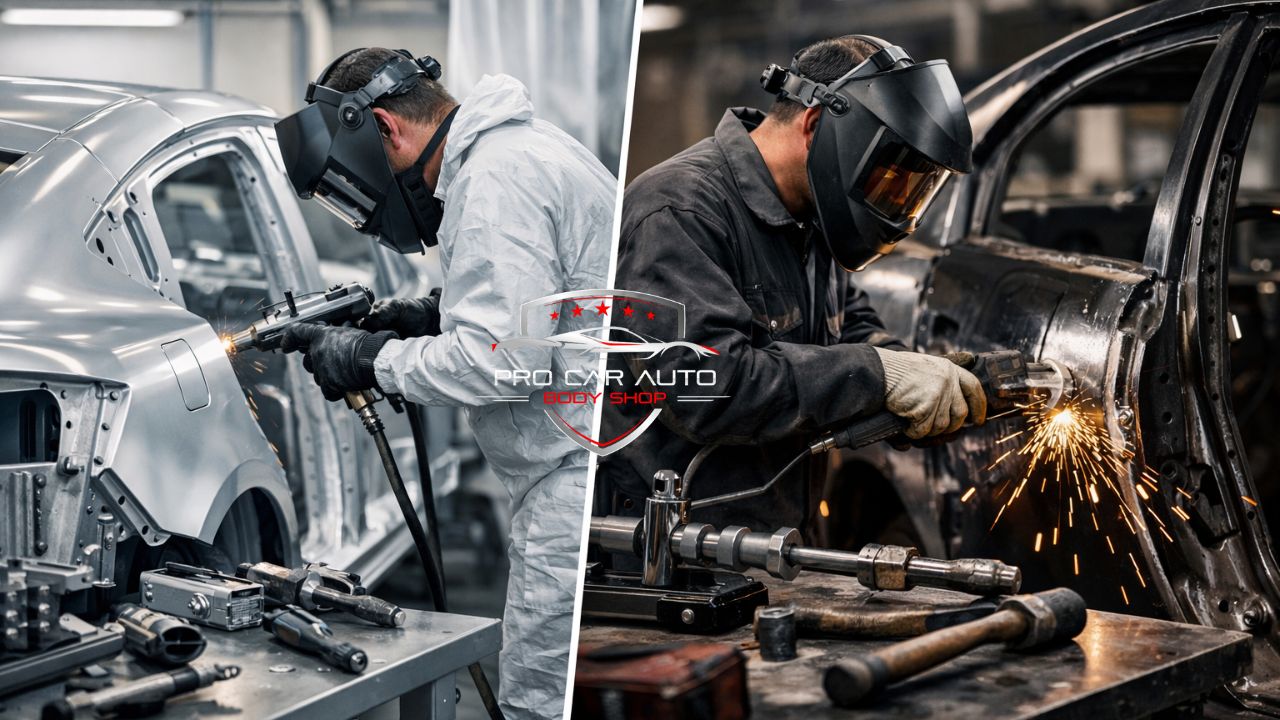
I’ve been working on high-end European cars at Procar Auto Body shop for years, and I’ve seen what happens when these vehicles end up at the wrong shop. Today, I’m going to explain exactly why aluminum repairs are a completely different animal, and why your luxury car deserves specialized care.
The Aluminum Revolution: Why European Automakers Made the Switch
First, let’s talk about why manufacturers are using aluminum in the first place.
It’s All About Performance and Efficiency
European automakers—especially the luxury brands—started incorporating aluminum into their vehicles for several compelling reasons:
Weight Reduction: Aluminum is about one-third the weight of steel. For a performance vehicle, reducing weight means better acceleration, handling, and braking. For every 100 pounds you remove from a vehicle, you can improve fuel economy by 1-2%.
Strength-to-Weight Ratio: Modern aluminum alloys can be just as strong as steel while being significantly lighter. This means engineers can build safer, more rigid structures without the weight penalty.
Corrosion Resistance: Aluminum naturally resists corrosion much better than steel. No rust means longer vehicle life and better resale value—critical for luxury car owners.
Fuel Economy Standards: With increasingly strict emissions and fuel economy regulations, manufacturers need every advantage they can get. Aluminum helps them meet these standards while maintaining performance.
Which Parts Are Aluminum?
Depending on the model and year, you might find aluminum in:
- Hood, fenders, and doors
- Trunk lids and tailgates
- Bumper reinforcements
- Quarter panels
- Roof panels
- Complete chassis structures (like the Audi A8 or Jaguar XJ)
Some vehicles, like certain BMW 7-Series models, use an aluminum space frame with strategic steel reinforcements. Others, like newer Range Rovers, feature nearly all-aluminum bodies.
Pro Tip from the Shop: If you’re not sure what your car is made of, we can tell you in 5 minutes with a simple magnet test and our factory documentation. Knowing your vehicle’s construction is the first step to proper repair.
Why Aluminum Can’t Be Treated Like Steel: The Critical Differences?
Here’s where things get serious. Aluminum and steel might both be metals, but they behave completely differently when damaged and require entirely different repair techniques.
Material Properties That Change Everything
-
Aluminum Doesn’t “Bounce Back”
Steel has what we call “memory”—it wants to return to its original shape. You can heat steel, bend it, work it, and often restore it to near-original condition.
Aluminum? Once it’s bent or stretched, it’s permanently deformed. The molecular structure changes, and trying to work it like steel can actually weaken it further. This means aluminum panels often need to be replaced rather than repaired, even for damage that would be fixable on a steel panel.
-
Heat Is the Enemy
With steel, we can use heat to help reshape panels. We can weld at high temperatures without major concerns about structural integrity.
Aluminum loses strength rapidly when heated above certain temperatures—sometimes as low as 350°F. Overheat an aluminum panel during repair, and you’ve just compromised its crash worthiness. Your car might look perfect, but it won’t protect you the way the engineers intended.
-
Contamination Is a Nightmare
If steel particles or tools contaminate aluminum during repair, you get galvanic corrosion—a chemical reaction that literally eats away at the aluminum over time. This is why we maintain completely separate work areas, tools, and equipment for aluminum repairs.
Pro Tip from the Shop: Any shop that tells you they can fix your aluminum BMW in the same bay where they just worked on a steel Honda is lying to you or doesn’t understand the risks. Cross-contamination is real and will destroy your repair.
The Equipment and Certification You Should Demand
Not every body shop can legally or safely repair aluminum vehicles. Here’s what separates the specialists from the rest.
Dedicated Aluminum Repair Facility
A proper aluminum repair facility needs:
Separate Work Bays: Aluminum must be repaired in a completely isolated area away from steel dust and particles.
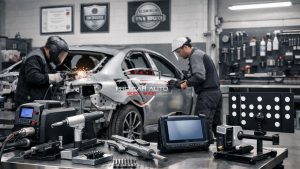
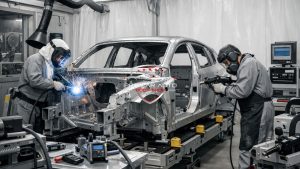
Dedicated Tools: Every tool that touches aluminum—grinders, sanders, welding equipment, measuring systems—must be used ONLY for aluminum. We literally have two complete sets of tools.
Specialized Welding Equipment: Aluminum requires MIG welding with specific wire, shielding gas (usually 100% argon), and precise heat control. Standard steel welding equipment doesn’t cut it.
Aluminum-Specific Spray Booth: Even the paint booth needs special filtration to prevent steel contamination.
Rivet and Bonding Systems: Many aluminum repairs use specialized rivets and structural adhesives instead of traditional welding. These require specific applicators and curing equipment.
Manufacturer Certifications
This is non-negotiable. European manufacturers require specific training and certification for aluminum repair:
- BMW Certification: Requires documented training and annual recertification
- Mercedes-Benz Certification: Includes specific aluminum welding procedures
- Audi Certification: Covers the aluminum space frame technology
- Jaguar Land Rover Certification: Essential for all-aluminum models
At Procar Auto Bodyshop, our technicians hold I-CAR Platinum certification plus manufacturer-specific credentials for European brands. We invest thousands in ongoing training because the technology changes constantly.
[CTA: Want to verify your body shop’s certifications? Ask to see their manufacturer authorization certificates. Better yet, bring your car to Procar Auto Bodyshop for a free consultation—we’ll show you our credentials and explain exactly what your vehicle needs.]
What Happens When Aluminum Repair Goes Wrong?
Let me paint you a picture of what we see when vehicles come to us after being “fixed” at non-specialized shops.
The Horror Stories
Case 1: The Welded Nightmare A customer brought us a 2019 Mercedes E-Class after another shop “repaired” aluminum fender damage. They had used standard steel MIG welding techniques. Within six months, the welds were cracking, and corrosion was spreading. The “repair” actually cost more to fix than replacing the panel would have originally.
Case 2: The Weakened Structure An Audi Q7 came in after a front-end collision was repaired elsewhere. During our inspection, we found heat damage to the aluminum chassis rails—they’d overheated the metal during straightening. The car looked fine, but the structural integrity was compromised. In another accident, those rails wouldn’t absorb impact properly.
Case 3: The Insurance Disaster A Range Rover owner took their vehicle to a non-certified shop to “save money.” The shop didn’t use OEM aluminum panels or proper bonding techniques. When the owner went to trade it in 18 months later, the dealer inspection revealed improper repairs. The trade-in value dropped by $8,000.
The Real Costs of Cheap Repairs
- Safety Compromise: Weakened aluminum structure won’t protect you in a crash
- Resale Value: Luxury car buyers and dealers can spot improper repairs
- Insurance Issues: Some insurers void coverage if repairs aren’t done to manufacturer standards
- Future Repair Costs: Improper initial repairs create cascading problems
- Warranty Void: Manufacturer warranties may be voided by unauthorized repairs
Pro Tip from the Shop: If a body shop’s estimate is significantly lower than others for aluminum repair, there’s a reason. They’re either planning to cut corners, use aftermarket parts, or don’t understand the complexity of the job.
The Proper Aluminum Repair Process
Here’s what actually needs to happen when your European aluminum vehicle gets damaged.
Step 1: Comprehensive Assessment
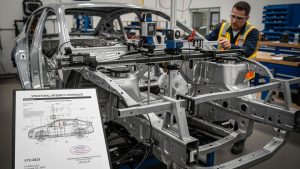
We use laser measuring systems to document every millimeter of structural deviation. Aluminum doesn’t forgive guesswork.
Step 2: Safe Disassembly
Aluminum panels are often bonded and riveted, not just bolted. Removal requires specific procedures to avoid damaging adjacent components.
Step 3: Replace, Don’t Repair
In many cases, we replace aluminum panels rather than attempting repair. It’s more expensive upfront but ensures safety and longevity.
Step 4: Proper Joining Techniques
Depending on the vehicle and location:
- Structural Adhesive Bonding: High-strength epoxies that cure under specific conditions
- Self-Piercing Rivets (SPR): Specialized rivets that don’t require pre-drilling
- Resistance Spot Welding: For specific aluminum alloys
- MIG Welding: With aluminum wire and 100% argon shielding gas
Step 5: Quality Control
Every repair is verified with laser measuring and documented for your records. We also provide a lifetime warranty on our workmanship.
[CTA: Wondering if your current estimate is following proper procedures? Bring it to Procar Auto Bodyshop for a free second opinion. We’ll review the repair plan and tell you if corners are being cut—no obligation.]
How to Choose the Right Shop for Your European Car?
Don’t just Google “body shop near me.” Your high-end European vehicle deserves better.
Questions to Ask Before You Commit:
- “Are you certified by [your vehicle manufacturer]?” They should show you current certification documents, not just say “yes.”
- “Do you have a dedicated aluminum repair facility?” They should be able to show you the separate bay, tools, and welding equipment.
- “What measuring system do you use?” Look for laser measuring systems, not just visual inspection.
- “Will you use OEM aluminum panels or aftermarket?” OEM is worth the extra cost for proper fit and material properties.
- “Can I see examples of similar repairs you’ve completed?” Ask for before/after photos of aluminum European vehicles.
- “What warranty do you provide?” We offer lifetime warranty on our structural repairs.
- “How do you prevent cross-contamination?” They should explain their separation protocols in detail.
Red Flags to Run From:
- “Aluminum and steel? We fix them all the same.”
- No visible manufacturer certifications
- Estimates that seem too good to be true
- Can’t explain their welding process
- Same work bay for all vehicles
- Pushy about using aftermarket parts
- No dedicated aluminum tools
The Investment in Specialized Repair: Worth Every Penny
Yes, specialized aluminum repair costs more than traditional steel bodywork. Here’s why it’s worth it:
What You’re Paying For:
- Certified Technician Expertise: Years of manufacturer-specific training
- Specialized Equipment: Hundreds of thousands in dedicated tools and facilities
- OEM Parts: Exact factory specifications and materials
- Safety Assurance: Repairs that meet engineering standards
- Resale Value Protection: Documented proper repairs
- Peace of Mind: Your family rides in a vehicle that’s truly fixed
What You’re Avoiding:
- Re-repairs that cost double
- Compromised crash safety
- Resale value loss
- Insurance complications
- Manufacturer warranty issues
- Ongoing corrosion and structural problems
Pro Tip from the Shop: Your insurance company might try to steer you to their “preferred” shops. You have the legal right to choose your own repair facility. Don’t let them pressure you into a shop that isn’t qualified for aluminum work.
The Bottom Line: Your Safety Isn’t Negotiable
You bought a high-end European vehicle because you value performance, luxury, and safety. The engineers at BMW, Mercedes, Audi, and other manufacturers spent millions developing aluminum structures that protect you while delivering incredible driving dynamics.
When that vehicle gets damaged, it deserves repair by people who understand and respect that engineering.
At Procar Auto Bodyshop, we’ve invested in the training, equipment, and certifications to do aluminum repair right. We’re not the cheapest option—we’re the right option.
Your car isn’t just transportation. It’s a sophisticated machine that deserves specialized care. And your family’s safety riding in that machine? That’s priceless.
Aluminum vs. Steel: Quick Reference Guide
Steel Repairs:
- Can often be reshaped and straightened
- Heat can be used to aid repair
- Standard welding equipment works
- Less contamination concern
- Generally lower repair costs
- Most shops can handle
Aluminum Repairs:
- Usually requires panel replacement
- Heat must be carefully controlled
- Requires specialized welding equipment
- Cross-contamination is critical issue
- Higher repair costs but necessary
- Requires certified specialized shop
Ready to Get Your European Car Properly Repaired?
At Procar Auto Bodyshop, we specialize in high-end European vehicles with aluminum construction. Our facility features:
✓ Dedicated aluminum repair bay with zero cross-contamination ✓ Manufacturer-certified technicians (BMW, Mercedes, Audi, and more) ✓ State-of-the-art laser measuring and welding equipment ✓ OEM parts and materials only ✓ Lifetime warranty on structural repairs ✓ Direct insurance claim handling
Free Services We Offer:
- Aluminum construction identification for your vehicle
- Second opinions on repair estimates
- Insurance coverage review
- Damage assessment and consultation
Contact Procar Auto Bodyshop:
- 📞 Call: 561-372-4547
- 📍 Visit: 1705 N Dixie Hwy, Pompano Beach, FL 33060
- 💻 Online: www.procarautobodyshop.com
Don’t trust your European luxury vehicle to just anyone. Trust the specialists who know aluminum inside and out.

No comment