
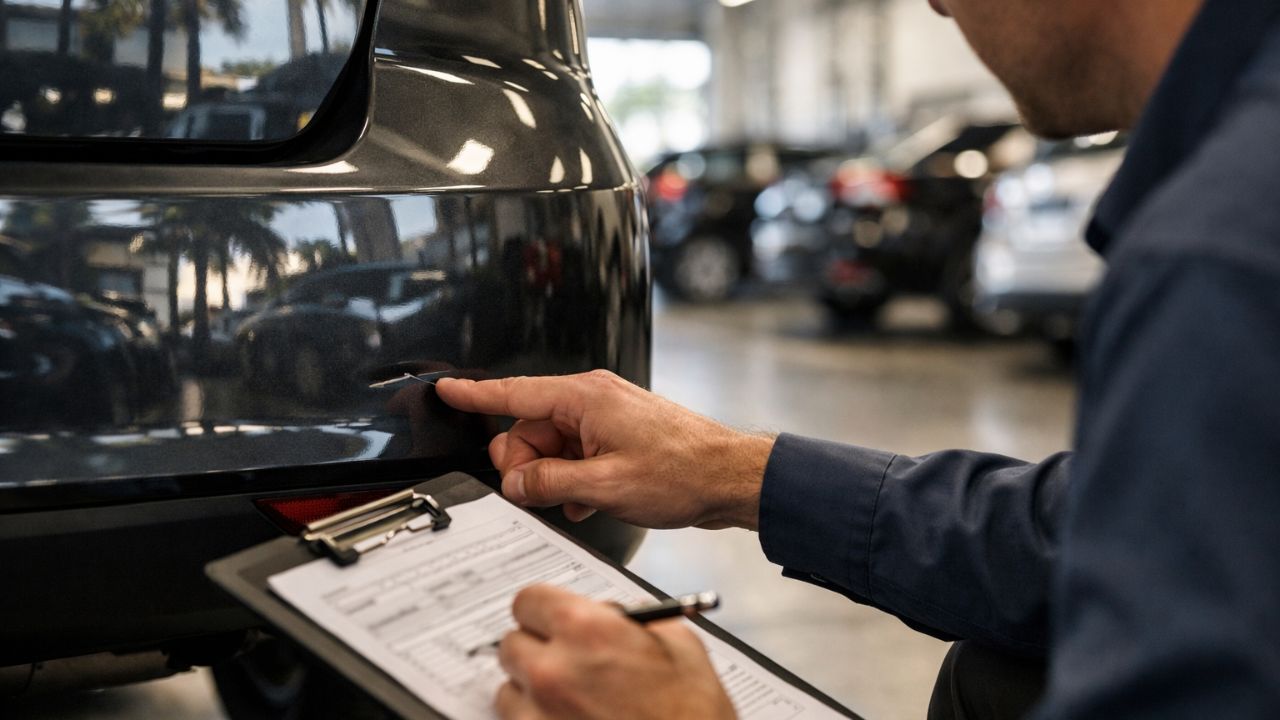
Will a Small Bumper Scratch Lower My Car’s Trade-in Value at a Florida Dealership?
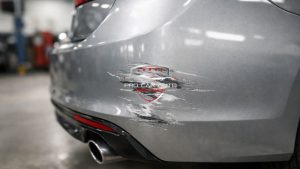
A customer walked into Procar Auto Bodyshop last month with a 2021 Honda Accord. Beautiful car, low mileage, well-maintained. Just one problem: a 6-inch scratch on the rear bumper from a shopping cart.
“Think I should fix this before I trade it in?” she asked.
I looked at the scratch. Maybe $350 to repair properly. Then I told her the truth: “That scratch will cost you $800-$1,200 at the dealership.”
Her eyes went wide. “For a scratch?!”
Welcome to the reality of vehicle trade-ins in Florida. That “small” scratch, that “tiny” dent, that “barely noticeable” scrape—dealerships use them as negotiating weapons to slash thousands off your trade-in value.
I’ve been in the auto body business for over 15 years, and I’ve watched this play out hundreds of times. Today, I’m going to tell you exactly how dealerships assess damage, what it really costs you, and when it’s worth fixing before you trade.

How Florida Dealerships Actually Assess Trade-Ins?
Let’s start with the process, because understanding how dealerships evaluate your car changes everything.
The Trade-In Inspection Process
When you bring your vehicle to a dealership for trade-in, here’s what happens:
Step 1: The Lot Inspection A salesperson or lot manager does a quick walk-around looking for obvious damage:
- Scratches and dents
- Bumper damage
- Paint chips and scuffs
- Wheel curb rash
- Glass chips or cracks
- Tire condition
Step 2: The Reconditioning Estimate They assess what it’ll cost to make your car “lot ready”:
- Body work and paint
- Detailing and cleaning
- Mechanical repairs
- Interior repairs
- Tire replacement if needed
Step 3: The Wholesale vs. Retail Decision Based on age, mileage, condition, and market demand, they decide:
- Retail: Fix it up and sell on their lot (higher profit)
- Wholesale: Send it to auction as-is (quick sale, lower profit)
- CPO (Certified Pre-Owned): Highest standards, best profit (if applicable)
Step 4: The Deduction Calculation They deduct from trade-in value:
- Estimated repair costs
- PLUS a markup (usually 1.5x to 2x actual repair cost)
- PLUS negotiating buffer
- PLUS risk/hassle factor
The Math They Don’t Show You
Here’s where it gets ugly. That $350 bumper scratch repair?
Dealership’s Thinking:
- Actual repair cost: $350
- Markup (1.5x): $525
- Negotiating buffer: $300
- “That gives us room to move”: $200
- Total deduction from your trade: $1,025
You see “$350 scratch.” They see “$1,000 negotiating leverage.”
Pro Tip from the Shop: Dealerships almost always overestimate repair costs and use them as negotiation tools. That “terrible damage” they’re horrified about? We fix it every day for half what they claim it costs.
What Counts as “Minor” Damage (And What Doesn’t)?
Let’s categorize damage by real-world impact on trade-in value.
Truly Minor (Small Impact)
Examples:
- Rock chips on hood (3-5 small chips)
- Door edge dings (1-2 small dings)
- Minor scratches under 2 inches
- Light swirl marks in paint
- Small scuffs on plastic trim
Typical Deduction:
- $200-$500 on average vehicles
- $300-$800 on luxury vehicles
Should You Fix It? Usually no—unless you’re trading a luxury vehicle and can fix it for under $250.
Moderate Damage (Significant Impact)
Examples:
- Bumper scratches 4-8 inches
- Door dings/dents (multiple or deep)
- Wheel curb rash (2+ wheels)
- Paint scratches through clear coat
- Larger rock chip clusters
- Small dents in panels
Typical Deduction:
- $800-$2,000 on average vehicles
- $1,500-$3,500 on luxury vehicles
Should You Fix It? Yes, if repair cost is less than 60% of expected deduction.
Major Damage (Massive Impact)
Examples:
- Bumper cracks or tears
- Body panel dents requiring replacement
- Paint damage exposing metal
- Multiple panels damaged
- Accident history showing on CarFax
- Misaligned panels from previous repair
Typical Deduction:
- $2,000-$5,000+ on average vehicles
- $4,000-$10,000+ on luxury vehicles
- May push vehicle to wholesale-only
Should You Fix It? Almost always yes—or sell privately instead of trading.
The CarFax Factor
Here’s something critical: if damage was from a reported accident, the deduction multiplies:
Same Damage, Different Scenarios:
- Random bumper scratch: -$800
- Bumper scratch from reported accident: -$2,500
- Why? CarFax shows accident history forever
Pro Tip from the Shop: If your vehicle has accident history on CarFax, dealerships automatically deduct $2,000-$5,000 minimum, regardless of repair quality. You’re better off selling privately where buyers care less about CarFax.
The Florida Dealership Advantage: They Know You Don’t Know
Florida dealerships are particularly aggressive on trade-in valuations. Here’s why:
High Tourist Market
Florida has massive vehicle turnover from:
- Retirees upgrading vehicles
- Snowbirds trading northern vehicles
- High lease return volume
- Strong used car export market
Result: Dealerships have inventory options. They don’t need YOUR trade. They’ll lowball you because someone else will take their offer.
Competitive Wholesale Market
Florida has huge wholesale auction volume:
- Manheim Florida (multiple locations)
- ADESA auctions throughout state
- Independent wholesale buyers
- Export dealers shipping overseas
Result: Dealerships can easily wholesale your car if you want too much. They’re not motivated to pay retail.
Weather-Related Damage Expectations
Florida vehicles often have:
- Paint fade from sun exposure
- Clear coat oxidation
- Salt air corrosion (coastal areas)
- Hurricane/flood history concerns
Result: Dealerships scrutinize Florida vehicles more carefully and deduct aggressively for any damage suggesting neglect.
The “Recon Budget” Game
Every dealership has reconditioning budgets. When you trade in, they’re thinking:
“Can we fix this for under $1,500 and still make $3,000 profit selling retail?”
If the answer is no, they:
- Send it to wholesale (you get less)
- Deduct maximum from trade value (you get crushed)
- Pass on your trade entirely (you’re stuck)
Pro Tip from the Shop: Florida dealerships are some of the toughest negotiators in the country. Come armed with knowledge and receipts showing damage is fixed or minimal.
[CTA: Planning to trade your vehicle? Bring it to Procar Auto Bodyshop for a free “trade-in inspection.” We’ll tell you exactly what a dealership will ding you for and what it actually costs to fix—before you negotiate.]

Real Numbers: What Damage Actually Costs vs. What You Lose
Let me show you real examples from customers we’ve helped.
Example 1: The Shopping Cart Scratch
Vehicle: 2020 Toyota Camry SE Trade-In Value (Clean): $22,500 Damage: 7-inch scratch on rear bumper, no dent
Repair Cost at Procar:
- Bumper repair and blend: $425
- Time: 1 day
Dealership Deduction Without Repair:
- First offer: -$1,200
- “Best and final”: -$900
- Actual trade with damage: $21,600
Customer’s Decision: Fixed it for $425, traded for $22,300 (dealer still found other things to deduct, but bumper wasn’t one).
Net Gain: $275 by fixing first
Example 2: The Parking Lot Door Ding
Vehicle: 2019 Honda CR-V EX-L Trade-In Value (Clean): $26,000 Damage: Two door dings on driver’s door, small but visible
Repair Cost at Procar:
- PDR (paintless dent repair): $280
- Time: 2 hours
Dealership Deduction Without Repair:
- Initial offer: -$1,500
- After negotiation: -$1,000
- Actual trade with damage: $25,000
Customer’s Decision: Fixed it for $280, traded for $25,800 (still got dinged for other wear).
Net Gain: $520 by fixing first
Example 3: The Curb Rash Wheels
Vehicle: 2021 BMW X3 xDrive30i Trade-In Value (Clean): $42,000 Damage: Curb rash on all four wheels (moderate)
Repair Cost at Procar:
- All four wheels refinished: $800
- Time: 2 days
Dealership Deduction Without Repair:
- First offer: -$3,500 (claimed wheels need replacing)
- After pushback: -$2,800
- Actual trade with damage: $39,200
Customer’s Decision: Fixed wheels for $800, traded for $41,500 (small deduction for other items).
Net Gain: $1,500 by fixing first
Example 4: The Front Bumper Crack
Vehicle: 2018 Mercedes-Benz C300 Trade-In Value (Clean): $31,000 Damage: Cracked front bumper from parking block, no other damage
Repair Cost at Procar:
- Bumper replacement and paint: $1,650
- Time: 3 days
Dealership Deduction Without Repair:
- First offer: -$4,200
- After negotiation: -$3,500
- Actual trade with damage: $27,500
Customer’s Decision: Fixed bumper for $1,650, traded for $30,200 (dealer found other deductions).
Net Gain: $1,050 by fixing first
Pro Tip from the Shop: Notice a pattern? Dealerships consistently deduct 2-3x the actual repair cost. Always fix damage if repair cost is less than 50% of the expected deduction.

When You Should Absolutely Fix Damage Before Trading?
Here are the specific situations where repairing damage before trade-in makes financial sense.
Situation 1: Luxury or High-Value Vehicles
Why: Luxury dealerships are extremely particular. A scratch that costs $500 to fix will result in a $2,000+ deduction on a BMW, Mercedes, or Audi.
Fix If:
- Vehicle worth over $35,000
- Damage is on visible panels (hood, bumpers, doors)
- Repair cost is under $1,500
Situation 2: Near-Perfect Vehicles
Why: If your car is in excellent condition except for one issue, that single issue becomes the dealership’s entire negotiating focus.
Fix If:
- Vehicle has low mileage (under 40,000)
- Interior and mechanical are pristine
- Only visible damage is the one item
- Repair cost is under $800
Situation 3: CPO (Certified Pre-Owned) Eligible Vehicles
Why: CPO programs have strict cosmetic requirements. Damage can disqualify your vehicle from CPO, which means $3,000-$5,000 less in trade value.
Fix If:
- Vehicle is CPO-eligible age/mileage
- Damage might disqualify CPO status
- Repair cost is under $2,000
- CPO premium is $3,000+
Situation 4: Multiple Small Issues
Why: Multiple small problems create a “neglect narrative” in the dealer’s mind. They’ll deduct aggressively thinking you didn’t care for the vehicle.
Fix If:
- 3+ visible damage points
- Total repair cost under $1,200
- Each individual repair is minor
- Fixing creates “well-maintained” impression
Situation 5: Lease Turn-In
Why: Leasing companies have specific damage tolerance guidelines. Exceeding them results in charges at turn-in that are often 2-3x retail repair cost.
Fix If:
- Damage exceeds “normal wear and tear” in lease agreement
- Leasing company charges exceed your repair cost
- You can fix for less than lease-end penalty
Pro Tip from the Shop: Always get your lease inspection 30-60 days before turn-in. This gives you time to fix damage at normal retail prices instead of paying inflated lease-end penalties.

When You Should NOT Fix Damage Before Trading?
Just as important—when fixing damage is a waste of money.
Skip Repairs When:
-
Vehicle Is Old or High-Mileage
- Over 100,000 miles: Dealers expect wear
- Over 10 years old: Going to wholesale anyway
- Already going to auction: No benefit
-
Damage Is Truly Minimal
- Tiny rock chips (1-3 chips)
- Light door edge scuffs
- Minor swirl marks
- Surface scratches in plastic trim
- Dealers won’t deduct much for these
-
You’re Trading at High-Volume Dealers
- High-volume dealers often wholesale most trades
- They offer below wholesale regardless
- Your repairs won’t increase their offer
- Better to sell privately if car is nice
-
Repair Cost Exceeds 75% of Expected Deduction
- If scratch deduction is $600 and repair is $500
- You’re spending $500 to gain $600 = not worth hassle
- Negotiate instead of repairing
-
You Have Accident History on CarFax
- Dealerships will deduct for CarFax regardless
- Minor repairs won’t change CarFax perception
- Better to focus on private sale
Pro Tip from the Shop: If your vehicle has major issues (mechanical problems, high mileage, accident history), don’t waste money on cosmetic repairs for trade-in. Consider selling privately or to CarMax/Carvana instead.
[CTA: Not sure if repairs are worth it before trading? Text us photos at 561-372-4547. We’ll give you honest feedback on repair cost vs. expected trade-in impact—free advice, no obligation.]
The Alternative: Selling Privately vs. Trading
Sometimes the smart move isn’t fixing—it’s avoiding the dealer trade-in entirely.
When Private Sale Makes More Sense
You Should Sell Privately If:
- Your vehicle has visible damage you don’t want to fix
- Private buyers are less picky than dealers
- You can price accordingly
- No “reconditioning markup”
- You have time (2-4 weeks to sell)
- Private sales take longer
- But typically net $2,000-$5,000 more
- Worth it if you’re not in a rush
- Your vehicle is desirable/popular
- High-demand models sell fast privately
- You control the price
- No dealer lowball
- You have CarFax accident history
- Dealers hammer you on this
- Private buyers care less
- You can explain what happened
The Numbers: Private vs. Trade-In
Example Vehicle: 2019 Honda Accord Sport with bumper scratch
Dealer Trade-In:
- Clean value: $23,000
- Deduction for scratch: -$1,200
- Dealer offer: $21,800
Private Sale:
- List price: $24,500
- Negotiate to: $23,800
- Net after advertising: $23,750
Difference: $1,950 more selling privately
Where to Sell Privately in Florida
Online Platforms:
- Facebook Marketplace (most active in Florida)
- Craigslist (still works for vehicles)
- Autotrader Private Seller
- Cars.com Private Seller
Alternative Buyers:
- CarMax (instant offer, fair pricing, no haggle)
- Carvana (online offer, pickup service)
- Vroom (online platform)
- We Buy Any Car
Pro Tip from the Shop: Get offers from CarMax, Carvana, and your dealership. Use the highest offer as leverage against the others. Competition works in your favor.
How to Negotiate Better Even With Damage?
If you decide not to fix damage, here’s how to minimize the hit.
Strategy 1: Get Multiple Trade-In Offers
Don’t just go to one dealership. Get 3-5 offers:
- Your preferred brand dealership
- CarMax
- Carvana
- 2-3 competing brand dealers
Use Offers as Leverage: “Dealer A offered me $22,500 even with the scratch. Can you match or beat that?”
Strategy 2: Separate Negotiations
Never negotiate trade-in and new purchase together. Dealers will:
- Give you more on trade but add it to new car price
- Give you less on trade but “discount” new car
- Confuse you with numbers going both directions
The Right Way:
- Negotiate new car price first (ignore trade-in talk)
- Get final new car price in writing
- Then negotiate trade-in separately
- Compare total deal after both are locked
Strategy 3: Get Pre-Repair Estimates
Even if you’re not fixing damage, get repair estimates from body shops.
Use Them to Counter Dealer Deductions:
Dealer: “We need to deduct $1,500 for that bumper scratch.”
You: “I have three estimates showing it’s a $450 repair. I’ll accept a $600 deduction, but $1,500 is unreasonable.”
This shows you’re informed and won’t accept inflated deductions.
Strategy 4: Timing Your Trade
Best Times to Trade in Florida:
- Late December/early January (dealer year-end quotas)
- End of quarter (March, June, September)
- Last few days of the month (monthly quotas)
Worst Times:
- Right after new model releases
- During slow season (summer in Florida)
- Beginning of month (no quota pressure)
Pro Tip from the Shop: Dealers are most motivated to deal at month-end when they’re trying to hit quotas. That scratch becomes less important when they need one more sale to hit their bonus.
What Procar Can Fix Quickly and Affordably?
Here are common trade-in damages we fix all the time—fast and cheap.
Quick Fixes (Same Day or Next Day)
Bumper Scratches:
- Minor scratches (under 6 inches): $250-$450
- Moderate scratches (6-12 inches): $400-$650
- Deep scratches requiring fill: $500-$800
Door Dings:
- Single small ding (PDR): $125-$200
- Multiple dings (2-3): $250-$400
- Deep dents requiring body work: $400-$700
Wheel Curb Rash:
- Single wheel refinish: $150-$250
- All four wheels: $500-$800
- Severe damage (per wheel): $200-$350
Paint Chips:
- Minor touch-up (5-10 chips): $150-$300
- Cluster repair and blend: $300-$500
- Hood respray: $600-$900
Plastic Trim Scratches:
- Bumper scuff repair: $200-$400
- Trim replacement: $150-$500 depending on part
The ROI on These Repairs
If fixing costs $500 and prevents a $1,500 dealer deduction, that’s a 200% return on your investment in 1-2 days.
Very few investments give you that return that quickly.
Pro Tip from the Shop: We offer “trade-in prep packages” where we fix the most visible issues for a flat rate. Most customers see $1,000-$2,500 improvement in trade value for $600-$900 in repairs.
[CTA: Planning to trade in the next 30 days? Come to Procar Auto Bodyshop for our “Trade-In Prep Special”—we’ll prioritize the repairs that maximize your trade value. Call 561-372-4547 to schedule.]
The CarFax and AutoCheck Factor
Let’s talk about how damage reports affect trade-in value beyond the physical damage.
When Damage Shows on Reports
Reported Accidents: If your damage came from an accident that was:
- Police-reported
- Insurance-claimed
- Reported by repair shop
It shows on CarFax/AutoCheck forever.
Trade-In Impact:
- Clean CarFax: Baseline value
- Minor accident reported: -10% to -20%
- Moderate accident reported: -20% to -35%
- Major accident reported: -35% to -50%
Even With Perfect Repairs: The CarFax record remains. Dealers will deduct based on the report, not the current condition.
When Damage Doesn’t Show
Not Reported If:
- You paid out-of-pocket for repairs
- No police report filed
- No insurance claim made
- Repair shop didn’t report to CarFax
Your Advantage: Dealer doesn’t know about previous damage. They can only deduct for current visible damage.
Should You Disclose Unreported Accidents?
Legally: In Florida, you’re not required to disclose accident history unless specifically asked.
Ethically: If damage was significant and could affect safety, you should disclose.
Practically: For minor unreported damage that was properly repaired, most people don’t disclose for trade-ins (different for private sales where buyers ask directly).
Pro Tip from the Shop: If you have unreported damage that’s fixed, get documentation of the repair showing it was done properly. If the dealer asks or finds out later, you have proof it was handled correctly.
Special Considerations for Luxury Vehicles
Luxury vehicles require extra attention before trade-in.
Higher Standards at Luxury Dealerships
BMW, Mercedes, Audi, Porsche, Lexus, etc. dealerships expect:
- Near-perfect cosmetic condition
- OEM parts used in any previous repairs
- Detailed service records
- No deferred maintenance
They Deduct More For:
- Any aftermarket parts (huge red flag)
- Mismatched paint
- Non-OEM wheels
- Modified or upgraded components not factory
The Certified Pre-Owned Premium
CPO luxury vehicles command $3,000-$8,000 premiums. But they have strict requirements:
CPO Cosmetic Standards (Typically):
- No scratches over 2 inches
- No dents over 1 inch
- No windshield cracks
- No curb rash on wheels
- No paint mismatch
- No aftermarket parts
Your Strategy: If your luxury vehicle is CPO-eligible, spend money to meet CPO standards. The premium far exceeds repair costs.
Example:
- Vehicle worth $38,000 wholesale
- CPO value: $43,000
- Repairs needed for CPO: $1,200
- Net gain: $3,800
Luxury Brand Recommendations
Based on what we see at Procar:
Most Forgiving Trade-Ins:
- Lexus (less picky on minor cosmetic issues)
- Acura (reasonable deductions)
- Volvo (fair assessments)
Most Strict Trade-Ins:
- Porsche (extremely picky)
- BMW M Series (perfectionist standards)
- Mercedes AMG (very strict)
- Audi S/RS models (high standards)
Pro Tip from the Shop: If trading a high-performance luxury vehicle, fix EVERYTHING. These dealers cater to demanding customers and won’t accept any imperfections.
Your Pre-Trade Checklist
Here’s exactly what to do before trading your vehicle.
30 Days Before Trade-In:
- Get Professional Assessment
- Body shop inspection (free at Procar)
- Mechanical inspection if needed
- CarFax/AutoCheck review
- Trade-in value research (KBB, Edmunds, NADA)
- Identify Cost-Effective Repairs
- List all visible damage
- Get repair estimates
- Calculate potential trade-in deductions
- Decide what to fix
- Gather Documentation
- Service records
- Repair receipts
- Window sticker if you have it
- Warranty information
- Spare keys and manuals
2 Weeks Before Trade-In:
- Complete Repairs
- Fix cost-effective damage
- Detail interior and exterior
- Touch up minor issues yourself
- Replace burnt-out bulbs
- Get Multiple Offers
- CarMax instant offer
- Carvana online offer
- 2-3 dealership appraisals
1 Week Before Trade-In:
- Final Prep
- Professional detail ($150-$250)
- Remove all personal items
- Clean trunk and under seats
- Make sure spare tire and jack are present
- Set Your Number
- Know your minimum acceptable trade value
- Have backup plan (private sale, keep longer)
- Be ready to walk away
The Bottom Line: Do the Math
Here’s the simple formula:
Should You Fix Damage Before Trading?
YES, if: Repair Cost < 50% of Expected Deduction
MAYBE, if: Repair Cost = 50-75% of Expected Deduction
NO, if: Repair Cost > 75% of Expected Deduction
Example:
- Bumper scratch repair: $450
- Expected dealer deduction: $1,200
- $450 is 37.5% of $1,200
- Answer: YES, fix it
Remember:
- Dealers always overestimate repair costs
- They add markup and negotiating buffer
- Small fixes often return 2-3x the investment
- Perfect condition = less negotiation leverage for dealer
We’re Here to Help You Maximize Trade Value
At Procar Auto Bodyshop, we’ve helped hundreds of South Florida residents prepare vehicles for trade-in. We know exactly what dealers look for and what they’ll deduct.
Our Trade-In Prep Services:
- Free trade-in damage assessment
- Honest advice on what to fix vs. what to leave
- Fast-turnaround repairs (most jobs 1-3 days)
- Trade-in prep packages (bundled pricing)
- Written estimates you can use to negotiate
Why Customers Choose Procar:
- 15+ years in South Florida
- Relationships with local dealerships (we know their standards)
- Fast, quality work
- Transparent pricing
- “Only fix what makes financial sense” philosophy
Procar Auto Bodyshop:
- 📞 Call: 561-372-4547
- 📍 Visit: 1705 N Dixie Hwy, Pompano Beach, FL 33060
- 💻 Online: www.procarautobodyshop.com
Free Services:
- Trade-in damage assessment
- Repair cost vs. deduction analysis
- CarFax review and impact discussion
- Trade-in timing advice
Don’t lose $1,500 at the dealer because you didn’t spend $500 on smart repairs. Come see us first.




No comment