Collision Repair Insurance Claim – Step by Step
A collision repair insurance claim follows a structured process that begins immediately after an accident and continues until the vehicle is fully repaired and safely returned to the road. While many drivers assume this process is simple, it actually involves several important stages that determine whether repairs are approved correctly, completed fully, and aligned with proper safety standards. Each step builds on the previous one, which is why accurate documentation, professional inspection, and consistent communication are critical throughout the claim.
Understanding how a collision repair insurance claim works step by step helps vehicle owners avoid delays, underpayments, and incomplete repairs. The process is not designed to rush vehicles back on the road—it is meant to confirm damage, approve necessary repairs, and ensure the vehicle is restored as close as possible to its pre-accident condition.
Step 1: Reporting the Accident and Opening the Insurance Claim
The collision repair insurance claim process begins when the accident is reported to the insurance company. This creates the official claim file that follows the vehicle throughout the repair process. The claim file includes accident details, date and location, basic damage descriptions, and policy information. Everything that happens later—inspections, approvals, and payments—is tied directly to this file.
At this stage, the insurance company’s primary goal is to open the claim quickly and assign it for review. This step does not involve a full repair evaluation. Many vehicle owners believe the claim is already fully assessed at this point, but in reality, this step simply starts the process and sets the framework for later decisions.
Step 2: Initial Insurance Adjuster Evaluation
After the claim is opened, an insurance adjuster is assigned to evaluate the damage. This evaluation may be done in person, through photos, or using digital estimating tools. The adjuster’s role is to determine coverage eligibility and estimate visible damage—not to perform a full technical repair analysis.
Because adjuster evaluations are limited in time and scope, they usually focus on exterior damage such as bumpers, fenders, doors, and panels. Structural damage, alignment shifts, and internal component issues are often not identified during this step. This is normal and expected, which is why the initial evaluation should be viewed as a starting point rather than a final decision.

Step 3: Initial Insurance Estimate Is Issued
Based on the adjuster’s evaluation, the insurance company prepares an initial estimate. Many vehicle owners mistakenly believe this estimate represents the total cost of collision repairs. In reality, it is a preliminary estimate designed to move the claim forward, not to finalize repairs.
This estimate is usually written before the vehicle is disassembled. Once repairs begin and panels are removed, additional damage is often discovered. The initial estimate simply reflects what could be seen at the time of inspection, not the full impact of the collision.
Step 4: Choosing an Auto Body Shop for Collision Repairs
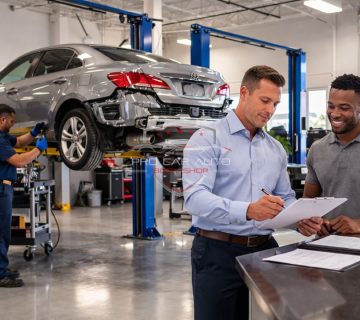
Vehicle owners have the right to choose their auto body shop for collision repairs, even if the insurance company recommends a specific facility. This step is critical because the repair shop is responsible for identifying hidden damage, documenting repair needs, and communicating with the insurance company.
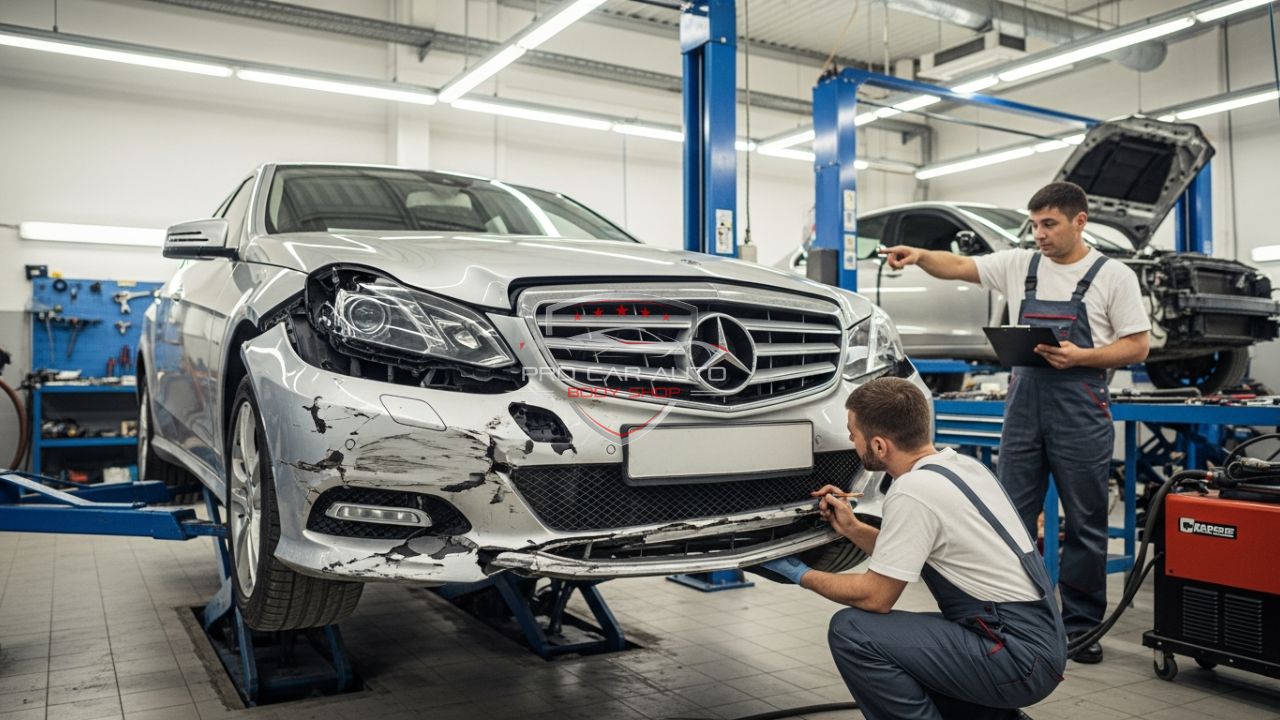
A professional collision repair shop performs a much more detailed inspection than what is possible during an insurance evaluation. This inspection determines how the accident affected the vehicle structurally, mechanically, and electronically. The quality of this inspection directly affects how accurate the insurance claim becomes.
Step 5: In-Depth Inspection and Disassembly
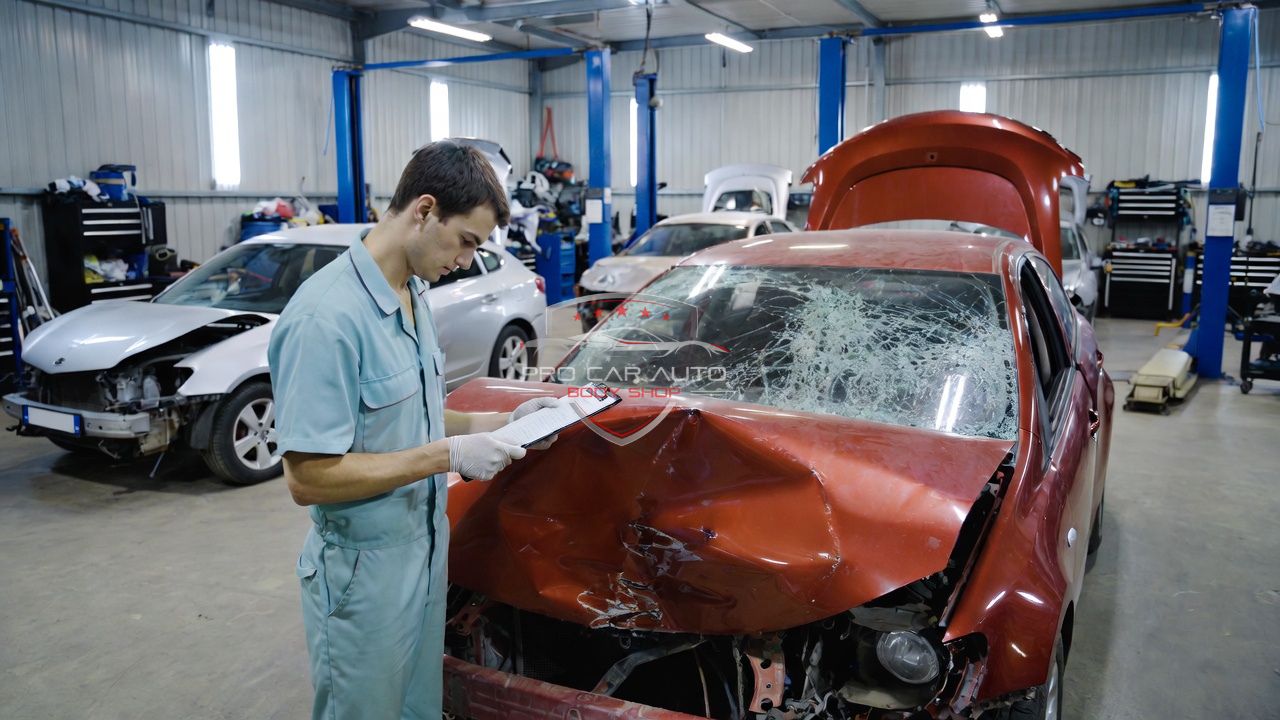
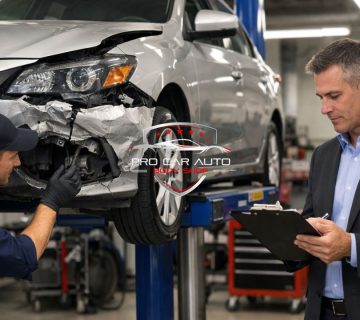
Once the vehicle arrives at the collision repair facility, a thorough inspection begins. This often involves partial disassembly to access areas hidden behind panels, bumpers, and trim. Collision forces travel inward, which means damage is frequently present in areas not visible during initial evaluations.
During this stage, technicians may identify structural deformation, mounting point movement, alignment issues, and safety system impact. This is one of the most important steps in the collision repair insurance claim process because it reveals the true extent of accident-related damage.
Step 6: Submitting Additional Damage to Insurance
When additional damage is discovered, the repair facility prepares detailed documentation explaining the findings. This includes photos, written descriptions, and repair logic that clearly connects the damage to the accident. This information is submitted to the insurance company for review.
This step is often misunderstood by vehicle owners, but it is completely normal. Collision repair insurance claims are designed to evolve as more accurate information becomes available. Submitting additional damage ensures repairs are based on reality rather than assumptions.
Step 7: Insurance Review and Approval of Repairs
After receiving updated documentation, the insurance company reviews the information to determine whether additional repairs are approved. During this review period, repairs may pause temporarily while authorization is pending. This review ensures repairs are consistent with policy coverage and accident details.
Clear documentation and professional communication help prevent delays. When the insurer understands why repairs are necessary, approvals are typically granted without issue.
Step 8: Collision Repair Work Begins
Once approvals are in place, the collision repair shop proceeds with repairs according to the approved scope. This may include structural correction, panel replacement or repair, refinishing, alignment verification, and restoration of safety systems.
Collision repair is not just cosmetic work. Proper repairs restore the vehicle’s handling, crash protection, and long-term reliability. Insurance approval confirms that the insurer recognizes these repairs as necessary and accident-related.
Step 9: Quality Control and Final Inspection
After repairs are completed, the vehicle undergoes a detailed quality control and final inspection. This step ensures all approved repairs were completed correctly and that no safety-related issues remain. Alignment, fitment, paint finish, and system functionality are checked carefully.
Final inspection protects both the vehicle owner and the insurance company by confirming the repair meets proper standards before the claim is closed.
Step 10: Claim Finalization and Vehicle Delivery
Once repairs are verified, the insurance company finalizes payment and closes the collision repair claim. The vehicle is then returned to the owner in repaired condition. Claim closure confirms that all approved work was completed, documented, and paid correctly.
This final step marks the completion of the collision repair insurance claim process.
Why Professional Handling Matters at Every Step
Each step in the collision repair insurance claim process affects the next. Missed damage, weak documentation, or poor communication can lead to delays, underpayments, or incomplete repairs. Professional collision repair facilities manage the entire process to ensure repairs are approved correctly—not minimized.
Proper handling ensures insurance coverage works the way it is intended, supporting safe and complete vehicle restoration.
Collision Repair Insurance Claims in Pompano Beach
Vehicle owners across South Florida rely on Pro Car Auto Body Shop for professional collision repair insurance claim handling. Our process focuses on detailed inspections, accurate documentation, and consistent insurance coordination to ensure every step of the claim leads to proper, high-quality repairs.
📞 Call Now: (561) 372-4547
📧 Email: info@procarautobodyshop.com
📍 1705 Dixie Hwy, Pompano Beach, FL 33060
Final Thoughts
A collision repair insurance claim is not a single action—it is a step-by-step process that determines how safely and accurately a vehicle is restored after an accident. Each phase plays a critical role in ensuring repairs address real damage rather than surface appearance.
When handled professionally from start to finish, the collision repair insurance claim process delivers what it is meant to: safe, complete, and reliable repairs that restore confidence after an accident.

No comment