Insurance Collision Repair for BMW, Mercedes-Benz, and Audi Vehicles
Insurance collision repair for BMW, Mercedes-Benz, and Audi requires far more than standard auto body work. These vehicles are engineered with advanced materials, intelligent safety systems, and manufacturer-controlled repair procedures that must be followed precisely after a collision.
When an accident occurs, insurance coverage alone does not ensure a correct repair. What matters most is how the claim is written, how damage is documented, and whether repairs follow OEM standards. Without specialized handling, luxury vehicles are often under-repaired, misaligned, or returned with compromised safety systems.
Why European Luxury Vehicles Require Specialized Insurance Collision Repair?
BMW, Mercedes-Benz, and Audi vehicles are built with a focus on performance, occupant protection, and intelligent safety systems. These design priorities make collision repair far more technical than traditional bodywork.
European vehicles commonly use:
- Aluminum and mixed-material structures
- High-strength and ultra-high-strength steel
- Bonded, riveted, and laser-welded components
- Integrated crash-management zones
Because of this, even a moderate collision can affect multiple systems beyond visible damage.
Insurance Estimates Are Often Incomplete for BMW, Mercedes, and Audi
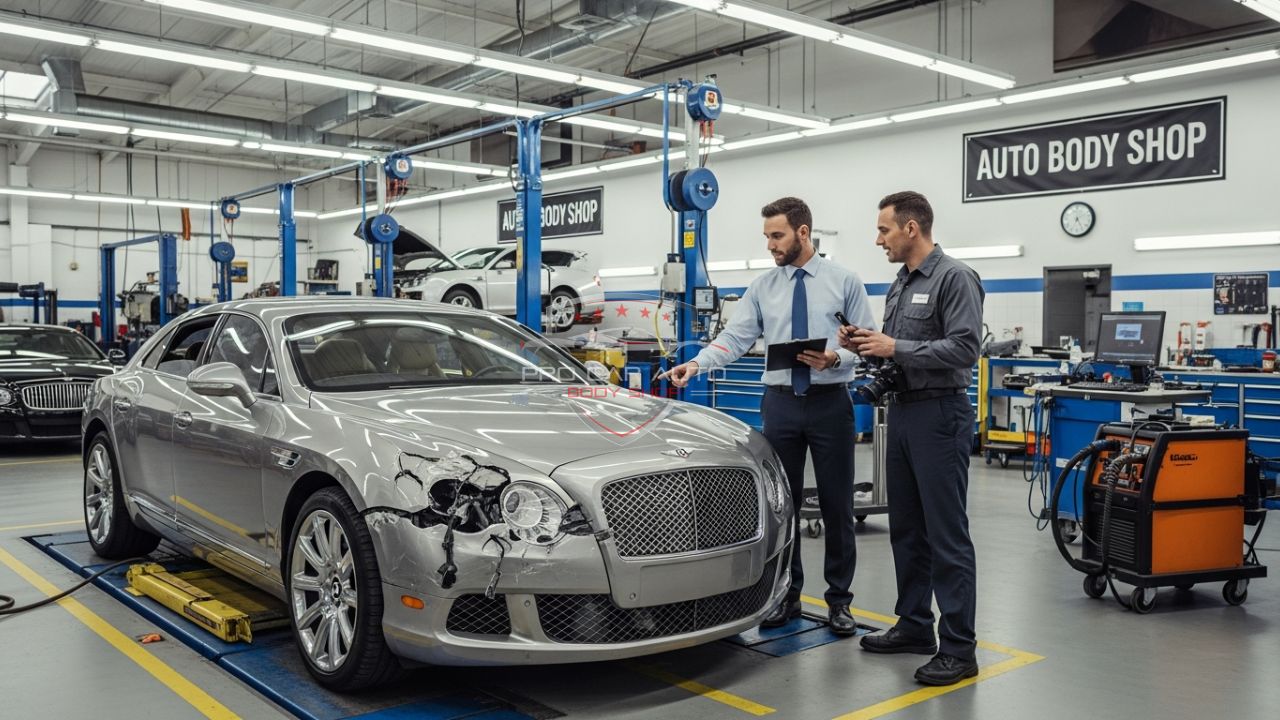
Most insurance claims begin with a preliminary estimate, often written from photos or a brief visual inspection. For luxury European vehicles, these estimates frequently miss critical damage, including:
- Structural distortion beneath panels
- Suspension and steering stress
- Subframe or mounting-point movement
- Electronic and sensor-related damage
This is why professional inspection and teardown are essential before any repair decisions are finalized.
OEM Repair Procedures Are Mandatory — Not Optional
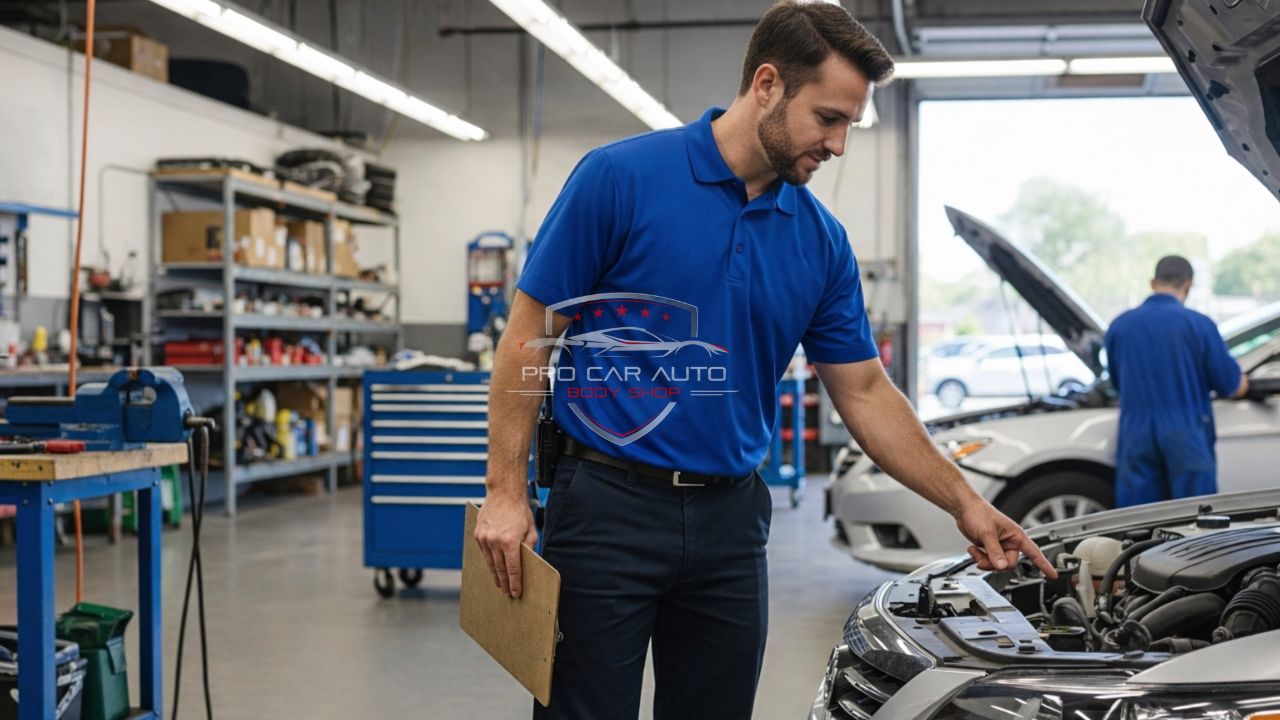
BMW, Mercedes-Benz, and Audi publish detailed OEM repair procedures that specify exactly how a vehicle must be repaired after a collision. These procedures control:
- Whether parts can be repaired or must be replaced
- Approved welding, bonding, or rivet methods
- Structural measurement tolerances
- Required diagnostic scans and calibrations
Insurance companies increasingly rely on OEM documentation to approve repairs. Skipping these steps can compromise safety and future crash performance.
Hidden Damage Is Common in European Vehicle Accidents
Luxury vehicles are designed to distribute crash energy across multiple zones. As a result, damage is often not localized to the impact area.
Hidden damage may include:
- Subframe distortion
- Suspension geometry changes
- Steering rack stress
- Cracked mounting points
- Sensor or camera misalignment
This type of damage usually becomes visible only after disassembly, which is why supplements are a normal part of insurance collision repair.
Insurance Supplements Are Expected for Luxury Repairs
For BMW, Mercedes-Benz, and Audi vehicles, insurance supplements are not a problem — they are part of proper repair.
Supplements are submitted to:
- Document additional damage
- Justify OEM-required procedures
- Support part replacement over repair
- Include calibration and diagnostic operations
Well-documented supplements protect the vehicle from unsafe shortcuts and incomplete repairs.
Advanced Driver Assistance Systems (ADAS) Must Be Recalibrated
Modern European vehicles rely heavily on ADAS technology. After a collision, insurance repair must include proper recalibration of:
- Forward-facing cameras
- Radar and lidar sensors
- Lane-keeping systems
- Collision avoidance systems
- Adaptive cruise control
These calibrations require specialized equipment and trained technicians and are essential for restoring safety functionality.
Parts Availability Impacts Insurance Repair Timelines
BMW, Mercedes-Benz, and Audi vehicles often require:
- OEM-only replacement parts
- VIN-specific components
- Imported or back-ordered items
Insurance collision repair timelines may extend due to parts availability. Waiting for correct parts ensures repairs meet safety and performance standards rather than using incorrect substitutes.
Insurance Coverage for BMW, Mercedes, and Audi Repairs
Insurance policies do cover collision repair for luxury vehicles, but approval depends on documentation and repair justification.
When handled professionally, insurance may cover:
- Structural and frame repairs
- OEM part replacement
- Suspension and steering components
- Diagnostic scanning and calibration
- Labor and materials required for proper repair
Coverage decisions are based on evidence — not assumptions.
Why the Repair Shop You Choose Matters More Than Insurance
Not all auto body shops are equipped to handle European luxury vehicles. A qualified repair facility understands:
- OEM repair standards
- European vehicle construction
- Insurance claim documentation
- Advanced diagnostics and calibration
Choosing the wrong shop can lead to incomplete repairs, safety issues, and reduced vehicle value.
Insurance Coordination Is Critical for Luxury Collision Repair
Professional collision repair shops manage insurance claims by:
- Writing OEM-supported estimates
- Submitting accurate supplements
- Communicating repair logic clearly
- Preventing unnecessary claim delays
This process ensures insurance approvals support proper repairs rather than cost-cutting shortcuts.

Long-Term Value Depends on Proper Collision Repair
Improper repairs on luxury vehicles can result in:
- Reduced resale or trade-in value
- Alignment and handling issues
- Malfunctioning safety systems
- Increased risk in future accidents
Proper insurance collision repair protects both vehicle performance and long-term investment.
Trusted Insurance Collision Repair for European Vehicles in Pompano Beach
Drivers throughout South Florida trust Pro Car Auto Body Shop for insurance collision repair on BMW, Mercedes-Benz, and Audi vehicles. Our process focuses on OEM procedures, precise documentation, and insurance-compatible repairs — not shortcuts.
📞 Call Now: (561) 372-4547
📧 Email: info@procarautobodyshop.com
📍 1705 Dixie Hwy, Pompano Beach, FL 33060
Final Thoughts on Insurance Collision Repair for BMW, Mercedes & Audi
Luxury European vehicles demand more than basic collision repair. Proper insurance collision repair requires experience, precision, manufacturer knowledge, and professional claim handling.
When repairs are supported by accurate inspections, OEM procedures, and clear insurance documentation, BMW, Mercedes-Benz, and Audi vehicles can be restored safely — without compromise.
No comment